





Understanding the reforms to the Decent Homes Standard

Contents |
[edit] Background
On 2 July 2025, the UK's Ministry of Housing, Communities and Local Government (MHCLG) launched a consultation on proposed reforms to the Decent Homes Standard (DHS). The consultation runs until 10 September 2025 and forms part of a wider package of housing quality reforms, including changes to Awaab’s Law, updates to Minimum Energy Efficiency Standards (MEES), the Housing Health and Safety Rating System Review, and the Renters’ Rights Bill.
The key tenets of the reform will see the DHS expanded to include the private rented sector (PRS) for the first time, setting a common minimum housing standard across both private and social sectors.
The full details of the consultation and proposed reforms to the DHS can be found here.
CIOB is not currently planning to submit a full response to the consultation. However, we understand that many of the reforms may impact on our members and the wider industry. With this in mind we have created this blog to break down some of the key aspects of the proposed reforms to the DHS. We will continue to monitor developments and keep members informed of any changes that could impact their work.
[edit] What is the DHS?
The DHS was first implemented in 2001 and last updated in 2006. It is the regulatory standard specifying the minimum criteria that social landlords must meet to ensure their properties are considered ‘decent’ in England. Currently, it only applies to social housing.
To meet the Standard, a home must be free from serious health and safety hazards, be in a reasonable state of repair, have reasonably modern facilities and services such as kitchens and bathrooms, and provide a reasonable degree of thermal comfort. The aim is to make sure tenants live in homes that are safe, warm, and in good condition.
Under its current form, the DHS has four criteria a home must meet:
- Criterion A – Free from serious hazards: The property must not contain any Category 1 hazards under the Housing Health and Safety Rating System (HHSRS), such as severe damp, dangerous electrics, or structural instability. The HHSRS is a risk-based evaluation tool used to identify and protect against potential risks and hazards to health and safety from any deficiencies identified in dwellings. An HHSRS assessment of damp and mould generates a score that falls into one of ten bands, from A to J, with A the most dangerous and J the safest, where hazards scored at bands A, B or C are ‘Category 1’, while everything else is ‘Category 2’.
- Criterion B – Reasonable state of repair: Key building components (e.g., roofs, walls, windows, doors, plumbing, electrics) must be in good condition. If too many of these are old or in poor repair, the home will fail this criterion.
- Criterion C – Modern facilities and services: The home should have reasonably modern facilities such as a kitchen less than 20 years old, a bathroom less than 30 years old, and adequate space and layout.
- Criterion D – Reasonable degree of thermal comfort: The property should have efficient heating and effective insulation to keep it warm during colder months.
The government estimates that around 1.5 million rented homes fail to meet the DHS currently. It also recognises the need update the DHS in a way that reflects modern expectations and that, as the Renters Rights Bill looks to extend the application of DHS into the PRS, it acts as a common standard for both private and social rented housing. To achieve these changes, the MHCLG is seeking to make several key changes to the DHS and the main proposals put forward in their consultation can be found below.
[edit] Proposal 1 – Updating the Definition of Disrepair
The proposed reforms to Criterion B would remove current age requirements from the definition of disrepair, so assessments would focus solely on the component’s condition. The Building Components List would be updated to include kitchens, bathrooms, all heating technology, fire safety, and damp and causes of damp, among others, as key components. Alongside this, the threshold for disrepair would also be simplified with clear, descriptive definitions for each building component, outlining the signs of poor condition.
[edit] Proposal 2 – Facilities Requirement
This proposal would bring Criterion C in line with the updates to Criterion B by removing the age conditions for bathrooms and kitchens, and sets out the requirement for a dwelling to provide three out of four ‘core facilities’ to meet the DHS:
- A kitchen with adequate space and layout.
- An appropriately located bathroom and WC.
- Adequate external noise insulation.
- Adequate size and layout of common entrance areas for blocks of flats.
[edit] Proposal 6 – Thermal Comfort
The consultation suggests updating thermal comfort requirements within Criterion D to meet the Minimum Energy Efficiency Standards (MEES), currently set at EPC E.
It is worth noting that the Department for Energy, Security and Net Zero (DESNZ) has recently closed its consultation on their 2025 Private Rented Sector MEES reforms, which proposed that by 2030 all private landlords may be required to meet a higher EPC C standard as well as for a dual metric approach to replace the current Energy Efficiency Rating (EER) system.
The DHS proposal also suggests updating Criterion D so that the primary heating system would be required to have a distribution system capable of providing heat to the whole home and have programmable heating. However, the government acknowledges it is still exploring the feasibility of this requirement for certain types of heat networks and how this could be enforced.
[edit] Proposal 7 – Damp and Mould
A new Criterion E would be introduced to ensure that damp and mould do not reach a hazardous level, sitting alongside the legal requirements introduced under Awaab’s Law. This new criterion would use the HHSRS to assess and regulate dwellings. Under this proposal, Criterion E will be failed if a damp and mould hazard is assessed to be anywhere from bands A to H on the HHSRS assessment, excluding only the mildest category 2 hazards.
Recent updates to Awaab’s Law will see it applied to the social rented sector in phases from October 2025 and a separate consultation will be carried out to extend its application to the private rented sector as well. CIOB will likely respond to this consultation once it is published and we will keep our members informed of any developments.
[edit] Next Steps
The extensive package of measures outlined in these reforms will come into effect over the next few years and will undoubtedly improve the safety and energy efficiency of dwellings for all tenants. The government is, however, aware of the financial pressures on landlords, particularly social rent landlords, who are also responsible for delivering new social housing supply. As such, they are currently proposing that the new reformed DHS comes into force from 2035 or 2037 and are seeking views on whether a phased implementation would help with this process.
[edit] Our Views
CIOB supports the proposals outlined above, in particular the removal of the age criterion from the definition of disrepair, the inclusion of fire safety and damp and causes of damp in the key components list, and we believe the creation of Criterion E to address damp and mould is a positive reform to the DHS.
The changes to Criterion D to require rented properties to comply with MEES are also welcome, especially in light of the ongoing separate consultation led by DESNZ to reform these by 2030.
We will continue to monitor developments, however, if you have any further views or feedback, please contact policy@ciob.org.uk.
This article appears on the CIOB blog site as "Understanding the Reforms to the Decent Homes Standard" by Miruna Leitoiu CIOB Policy and Public Affairs Officer dated 5th September 2025.
--CIOB
[edit] Related articles on Designing Buildings
- A measure of net well-being that incorporates the effect of housing environmental impacts.
- Are Energy Performance Certificates accurate?
- Consultation on updating the minimum energy efficiency standards.
- Creating strong communities – measuring social sustainability in new housing development.
- Decent Homes for Ageing Well.
- Decent Homes Standard.
- Fuel poverty.
- Heat Energy: The Nation’s Forgotten Crisis.
- Home quality mark.
- Minimum energy efficiency standard (MEES).
- NHBC technical standards.
- Simplified Building Energy Model.
- Technical housing standards – nationally described space standard.
- The cost of poor housing to the NHS.
- The EPC consultation in the context of changes to the NCM.
- The full cost of poor housing.
- The full cost of poor housing in Wales.
- The real cost of poor housing
- The EPC consultation in the context of changes to the NCM.
- The Home Energy Model and Future Homes Standard assessment wrapper.
- U-value conventions in practice: Worked examples using BR 443.
Featured articles
Check out some of the best features and news from Designing Buildings as well as key stories from around the web.

Government approach could undermine delivery and regeneration.
World's first mass timber data centre.

The overlooked environmental aspect of data centre development.
Introduction to radon awareness

New technical information sheet published by CIOB.
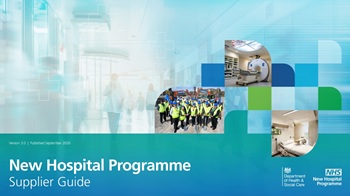
Updated supplier guide can help electrical contractors engage with NHP.

CIAT confirm the winners of the 2026 architectural technology awards.
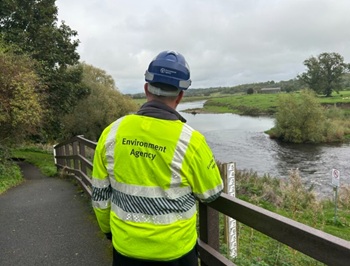
Government launches a one stop shop for flood preparedness.

Sir Edwin Lutyens: Britain's greatest architect? Book review.
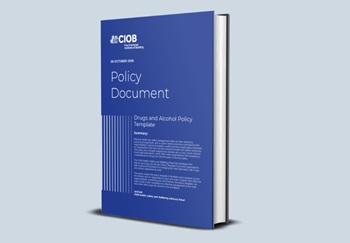
CIOB publishes free template to help assess and manage risks.
ECA's reflections on Party Conference season

Burnham wants to be confident of winning before asking for a fresh mandate.
New Chief Construction and Scientific Adviser

Sergio Cavalaro, Professor of Infrastructure Systems at Loughborough University.
Building safety levy for England

CIAT publish estimator tool for members.
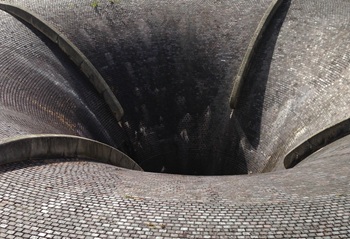
Water sector faces a growing crisis that could slow the delivery of vital infrastructure.